
How to Clean and Maintain Commercial Epoxy Resin Flooring for Maximum Longevity: A Complete Professional Guide
Commercial epoxy resin flooring is a smart investment for businesses that need durable, chemical-resistant surfaces. When properly installed and maintained, these floors can last between 10 and 20 years in commercial environments. However, achieving maximum longevity requires understanding the right cleaning techniques and maintenance practices.
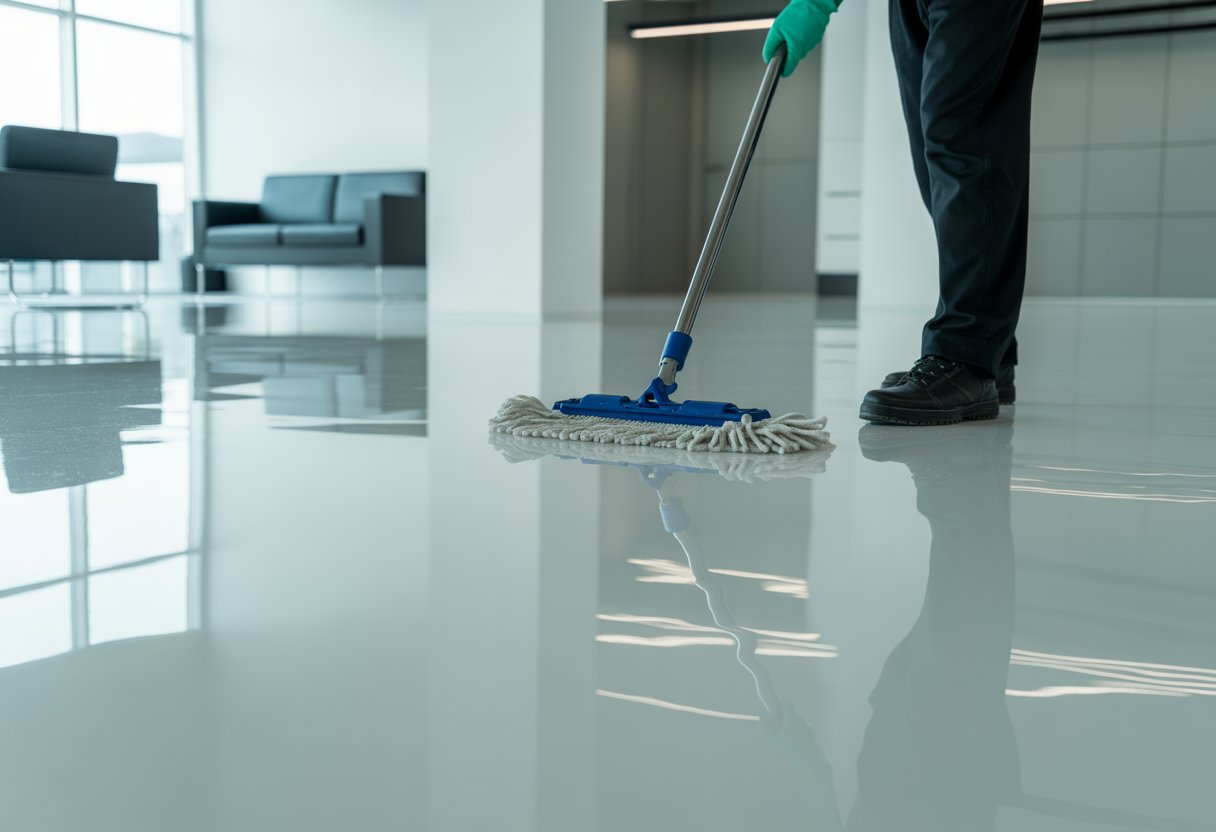
Daily sweeping with soft-bristled brooms and regular mopping with pH-neutral cleaning solutions forms the foundation of proper epoxy floor care. Many business owners mistakenly use harsh chemicals or abrasive tools that can damage the surface and reduce the floor’s lifespan. The key lies in consistent, gentle cleaning methods combined with strategic preventive measures.
Understanding the specific requirements of commercial epoxy flooring helps businesses protect their investment whilst maintaining an attractive appearance. From daily cleaning routines to professional maintenance considerations, proper care ensures these resilient floors continue delivering excellent performance for years to come.
Understanding Commercial Epoxy Resin Flooring
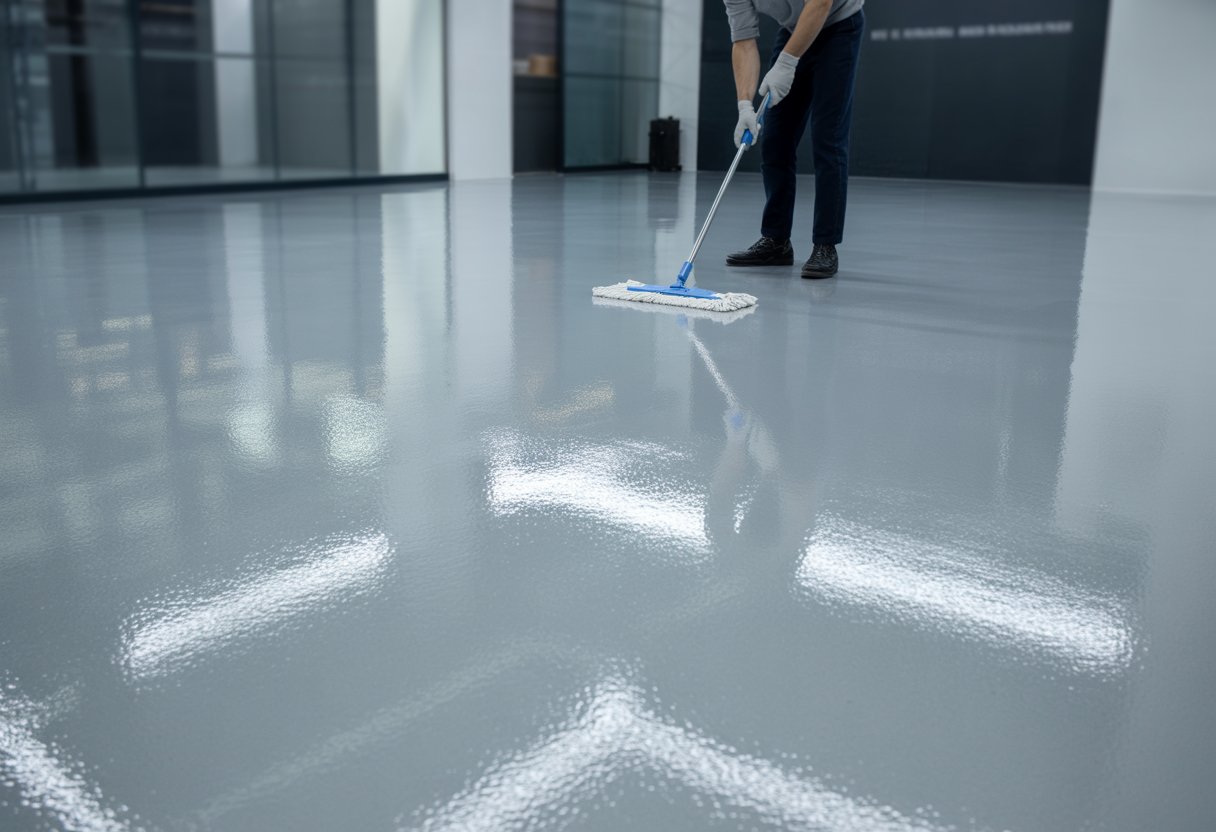
Commercial epoxy flooring systems provide exceptional durability and chemical resistance through advanced polymer technology. These coatings create seamless surfaces that withstand heavy traffic whilst requiring minimal maintenance across diverse business environments.
Key Features and Benefits
Durability and Strength
Epoxy floors deliver outstanding resistance to impacts, scratches, and abrasions. The chemical bonds between resin and hardener create a surface that withstands heavy machinery and constant foot traffic.
Chemical and Stain Resistance
These flooring systems resist oils, acids, alkalis, and most industrial chemicals. Spills cannot penetrate the non-porous surface, preventing permanent staining and contamination.
Easy Maintenance Requirements
The seamless nature eliminates grout lines and joints where dirt accumulates. Regular sweeping and occasional mopping maintain the floor’s appearance and hygiene standards.
Safety Features
Non-slip additives can be incorporated during installation to improve traction. The smooth surface reduces trip hazards whilst providing excellent light reflectivity to brighten workspaces.
Cost-Effectiveness
Epoxy coating systems offer excellent value through extended lifespan and reduced maintenance costs. Properly installed floors can last 15-20 years with minimal repairs needed.
Types of Epoxy Coating for Commercial Use
Water-Based Epoxy Systems
These systems offer low odour installation and faster curing times. They work well for light to moderate traffic areas like offices and retail spaces.
Solvent-Based Epoxy Coatings
Solvent-based formulations provide superior adhesion and chemical resistance. They suit heavy industrial environments but require proper ventilation during application.
100% Solids Epoxy
This type contains no solvents or water, providing maximum thickness in a single coat. It delivers the highest durability for warehouses and manufacturing facilities.
Epoxy Mortar Systems
These incorporate aggregate fillers for extra thickness and impact resistance. They handle extreme loads in areas like loading docks and production floors.
Typical Applications in Commercial Environments
Healthcare Facilities
Hospitals and clinics use epoxy flooring for its hygienic properties and chemical resistance. The seamless surface prevents bacteria growth and withstands frequent disinfection.
Manufacturing and Industrial Plants
Heavy machinery and chemical processes require epoxy floors that resist impacts and spills. These environments benefit from the coating’s durability and maintenance ease.
Food Processing and Commercial Kitchens
Food-grade epoxy systems meet health regulations whilst resisting hot water, steam, and cleaning chemicals. The non-porous surface prevents contamination and bacterial growth.
Warehouses and Distribution Centres
High-traffic areas with forklifts and heavy equipment rely on epoxy flooring’s strength. The smooth surface reduces dust and improves lighting efficiency through light reflection.
Retail and Showroom Spaces
Decorative epoxy systems provide attractive, durable surfaces that maintain appearance despite constant foot traffic. Various colours and finishes create appealing customer environments.
Daily and Regular Cleaning Practices
Daily cleaning routines keep epoxy flooring in top condition whilst preventing costly repairs. Quick action on spills and using proper tools protects the surface from damage.
Recommended Cleaning Routines
Sweep or vacuum epoxy floors daily to remove dirt and debris. This prevents particles from scratching the surface when people walk across the floor.
Use a microfibre mop with warm water and pH-neutral soap for daily cleaning. This combination removes grime without damaging the epoxy coating.
Weekly deep cleaning requires more thorough attention. Mix a gentle detergent with warm water for mopping larger areas.
Clean high-traffic zones twice daily if needed. Areas near entrances and work stations collect more dirt and require extra attention.
Always allow floors to air dry completely. This prevents water spots and maintains the floor’s shine.
Best Tools and Supplies for Routine Maintenance
Microfibre mops work best for epoxy flooring maintenance. They clean thoroughly without leaving residue or scratching the surface.
Soft-bristled brooms remove debris without damaging the coating. Avoid stiff brushes that can create scratches.
pH-neutral cleaning solutions protect the epoxy surface. These cleaners remove dirt whilst preserving the floor’s integrity.
Essential cleaning supplies:
- Microfibre mops and cloths
- Soft-bristled brooms
- pH-neutral detergent
- Warm water
- Wet vacuum for large spills
Never use abrasive cleaners on epoxy floors. These products can dull the surface and reduce the coating’s lifespan.
Addressing Spills and Stains Promptly
Clean spills immediately to prevent staining and surface damage. Quick action stops liquids from penetrating the epoxy coating.
Blot liquid spills with absorbent cloths first. Then clean the area with warm water and mild detergent.
Oil and grease spills need special attention. Use a degreasing agent designed for epoxy surfaces to remove these stains completely.
Chemical spills require immediate action. Remove the substance quickly and rinse the area with clean water to prevent coating damage.
Spill response steps:
- Remove excess liquid immediately
- Clean with appropriate cleaning solution
- Rinse with clean water
- Dry the area thoroughly
Document any chemical spills for maintenance records.
Prevention of Abrasive Damage
Place walk-off mats at all entrances to reduce dirt and moisture. These mats catch debris before it reaches the epoxy flooring.
Use furniture pads under heavy equipment and furniture. This prevents scratching when items are moved across the floor.
Avoid dragging heavy objects across the surface. Lift items or use proper moving equipment with protective wheels.
Train staff on proper floor care practices. Workers should understand which cleaning products and methods to avoid.
Regular inspection helps spot potential damage early. Look for scratches, chips, or areas where the coating appears worn.
Keep abrasive cleaners away from epoxy floors entirely. These products can permanently damage the surface and void warranties.
Deep Cleaning and Special Maintenance
Monthly deep cleaning sessions help preserve the epoxy coating’s protective qualities and appearance over time. Selecting appropriate cleaning chemicals prevents damage whilst properly addressing stubborn stains maintains the floor’s professional appearance.
Frequency and Methods of Deep Cleaning
Commercial epoxy floors require deep cleaning every 30 days to maintain optimal performance. High-traffic areas may need attention every 2-3 weeks.
Deep cleaning removes accumulated dirt that daily maintenance cannot address. This process prevents grime buildup that can damage the epoxy coating over time.
Equipment for Deep Cleaning:
- Rotary scrubbers for textured surfaces
- Floor scrubbing machines with soft brushes
- Industrial wet vacuums
- Microfibre mops
Start deep cleaning by removing all loose debris with a dust mop. Apply cleaning solution and allow it to dwell for 5-10 minutes. Use mechanical scrubbing equipment to work the solution into the surface.
Rinse thoroughly with clean water to remove all cleaning residue. Residual chemicals can create a slippery film or attract more dirt.
Selecting Suitable Cleaning Chemicals
Choose pH-neutral cleaners designed specifically for epoxy floors. These products clean effectively without compromising the coating’s integrity.
Recommended Cleaner Types:
- Neutral pH cleaners (6.5-8.5 pH range)
- Non-ionic surfactants
- Enzyme-based cleaners for organic soils
Avoid abrasive cleaners that contain harsh acids or strong alkalis. These chemicals can etch or discolour the epoxy surface permanently.
Dilute all cleaning products according to manufacturer instructions. Higher concentrations do not improve cleaning performance and may cause damage.
Test new cleaning products in an inconspicuous area first. This prevents costly damage to visible floor areas.
Dealing with Stubborn Stains
Address stains immediately to prevent permanent discolouration of the epoxy coating. Different stain types require specific treatment approaches.
Oil and Grease Stains: Apply degreasing agent and allow 10-15 minutes contact time. Scrub gently with a soft brush and rinse thoroughly.
Tyre Marks: Use a plastic scraper to remove surface deposits. Clean with neutral cleaner and warm water.
Paint or Adhesive: Carefully scrape off excess material with a plastic blade. Apply appropriate solvent sparingly and remove quickly.
Never use steel wool or abrasive cleaners on stubborn stains. These materials create scratches that trap dirt and bacteria. For persistent stains, contact the epoxy manufacturer for specific guidance.
Preventive Measures for Long-Term Floor Longevity
Simple protective steps can double the lifespan of commercial epoxy floors. Strategic placement of barriers, proper equipment handling, and regular inspections prevent costly damage before it starts.
Protective Mats and Barriers
Entry mats serve as the first defence against dirt, moisture, and debris that can scratch epoxy flooring. Place commercial-grade mats at all entrances, extending at least 3 metres inside doorways.
High-traffic areas need additional protection:
- Reception areas
- Loading docks
- Equipment zones
- Corridors between departments
Moisture barriers prevent water damage in specific zones. Install drainage mats near sinks, cleaning stations, and areas where liquids are handled regularly.
Chair mats under desks protect against wheel damage from office furniture. The constant rolling motion can wear down even durable epoxy floors over time.
Seasonal considerations matter too. During winter months, salt and de-icing chemicals can harm the surface. Increase mat coverage and cleaning frequency during these periods.
Replace worn mats promptly. Damaged mats with curled edges or holes can create trip hazards whilst failing to protect the floor beneath.
Furniture and Equipment Precautions
Heavy equipment poses the greatest threat to epoxy floors. Dragging machinery across the surface creates deep scratches that require professional repair.
Proper moving techniques include:
| Equipment Type | Protection Method | Additional Notes |
|---|---|---|
| Office furniture | Felt pads or sliders | Replace pads monthly |
| Heavy machinery | Professional movers | Never drag equipment |
| Rolling carts | Soft-wheel replacements | Check wheels for debris |
| Shelving units | Load distribution pads | Spread weight evenly |
Weight distribution prevents cracking and indentations. Use rubber pads under stationary equipment legs to spread the load across a larger surface area.
Sharp metal edges can gouge epoxy flooring during normal use. Install corner guards on equipment and furniture that workers frequently move around.
Regular equipment maintenance includes checking wheels, legs, and contact points for damage. Replace worn components before they harm the floor surface.
Routine Inspections and Damage Prevention
Weekly visual inspections catch problems before they become expensive repairs. Look for cracks, chips, staining, or areas where the coating appears thin or worn.
Key inspection areas include:
- High-traffic walkways
- Equipment loading zones
- Chemical storage areas
- Entry points and transitions
Document findings with photos and dates. This creates a maintenance history that helps identify problem areas and track the floor’s condition over time.
Early intervention saves money. Small chips can be spot-repaired quickly, but ignoring them leads to larger damage requiring full section replacement.
Temperature changes can cause expansion and contraction. Check joints and seams regularly for separation, especially after seasonal temperature shifts.
Professional assessments should occur annually. Trained technicians can spot issues that untrained eyes might miss, such as adhesion problems or chemical damage.
Address spills immediately, even with chemical-resistant epoxy floors. Prolonged exposure to harsh substances can eventually penetrate the coating and reach the concrete beneath.
Professional Maintenance and Cost Considerations
Professional maintenance services play a crucial role in extending epoxy flooring lifespans beyond what routine cleaning alone can achieve. Strategic investment in expert care delivers measurable returns through reduced replacement costs and enhanced floor performance.
When to Engage Professional Floor Services
Commercial facilities should schedule professional epoxy floor maintenance when daily cleaning proves insufficient. Heavy traffic areas typically require professional attention every 3-6 months.
Professional services become essential when floors show visible wear patterns or loss of gloss. Chemical damage or deep staining also signals the need for expert intervention.
Key indicators include:
- Reduced slip resistance
- Surface scratches or gouges
- Discolouration that won’t respond to standard cleaning
- Areas where the coating appears thin
Emergency professional cleaning becomes necessary after chemical spills or accidents. Quick response prevents permanent damage and costly floor replacement.
Industrial facilities with heavy machinery should engage professionals quarterly. Warehouses and retail spaces may extend this to twice yearly.
Benefits of Periodic Professional Care
Professional maintenance extends epoxy floors’ lifespan by 40-60% compared to basic cleaning alone. Expert technicians use specialised equipment that removes embedded dirt and restores surface properties.
Deep cleaning services penetrate textured surfaces where daily mopping cannot reach. This prevents buildup that gradually degrades the epoxy coating.
Professional services typically include:
- Diamond polishing to restore gloss
- Deep degreasing treatments
- Minor repair work
- Protective coating reapplication
Professional assessment identifies potential problems before they become costly repairs. Early intervention saves thousands in floor replacement costs.
Expert maintenance preserves slip resistance and chemical protection. This maintains workplace safety standards whilst protecting the underlying concrete.
Cost-Effective Maintenance Strategies
Preventive professional maintenance costs significantly less than floor replacement. Annual professional care typically costs £2-4 per square metre compared to £15-25 for new epoxy installation.
Creating a maintenance schedule reduces emergency call-out fees. Regular contracts often include discounted rates and priority service.
Budget-friendly approaches:
- Combine multiple services in single visits
- Schedule during off-peak periods
- Train staff for basic maintenance between professional visits
- Use recommended cleaning products to extend professional treatment intervals
Facilities can reduce costs by maintaining clean environments between professional visits. Proper daily cleaning extends professional service intervals from quarterly to semi-annually.
Investing in quality entrance matting reduces dirt accumulation. This simple step can halve professional cleaning frequency whilst maintaining floor appearance.
Frequently Asked Questions
Property managers and facility maintenance teams often have specific questions about maintaining their epoxy resin floors. These common concerns focus on daily care routines, stain removal techniques, product selection, and long-term preservation strategies.
What are the best methods for daily maintenance of commercial epoxy resin floors?
Daily maintenance should begin with sweeping using a soft-bristled broom to remove debris without scratching the surface. This prevents dirt and grit from building up and causing damage.
For routine mopping, use a pH-neutral detergent mixed with warm water. The solution should be applied with a damp mop rather than soaking the floor.
Immediate cleanup of spills is essential. Wipe up liquids as soon as they occur to prevent staining or potential slip hazards.
High-traffic areas may require additional attention during daily cleaning. Focus extra effort on entrances and frequently used walkways.
How can you remove stubborn stains from epoxy resin flooring without causing damage?
For most stubborn stains, create a paste using baking soda and water. Apply the paste to the stained area and let it sit for 10-15 minutes before scrubbing gently with a soft brush.
Oil-based stains respond well to degreasing agents specifically designed for epoxy floors. Apply the degreaser according to manufacturer instructions and rinse thoroughly.
Avoid using abrasive cleaners or steel wool as these can scratch the epoxy surface. Never use bleach or ammonia-based products on epoxy flooring.
For particularly difficult stains, consider using a plastic scraper to gently lift the stain before applying cleaning solutions. Always test cleaning methods in an inconspicuous area first.
What are the recommended commercial cleaning products for epoxy resin floors?
pH-neutral floor cleaners are the safest choice for regular maintenance. These products clean effectively without damaging the epoxy surface or its protective properties.
Specialised epoxy floor cleaners are available from commercial suppliers. These products are formulated specifically for resin flooring systems and provide optimal results.
For degreasing, use commercial degreasers that are compatible with epoxy surfaces. Check product labels to ensure they won’t cause discolouration or damage.
Avoid products containing acids, alkalis, or solvents as these can break down the epoxy coating. Always dilute cleaning products according to manufacturer specifications.
How frequently should a professional deep clean be scheduled for epoxy resin flooring?
Commercial epoxy floors typically require professional deep cleaning every 3-6 months depending on usage levels. High-traffic facilities may need quarterly service.
Warehouses and industrial facilities often benefit from monthly deep cleaning due to heavy machinery and increased debris. Healthcare facilities may require more frequent professional attention.
The deep cleaning process should include machine scrubbing with appropriate equipment. Rotary scrubbers can reach into textured surfaces more effectively than manual cleaning.
Professional cleaning services can assess the floor condition and recommend appropriate cleaning frequencies. They can also identify potential issues before they become costly problems.
What are the steps to properly seal epoxy resin floors during installation to ensure ease of future cleaning?
The concrete substrate must be properly prepared through diamond grinding or shot blasting. This creates the necessary surface profile for optimal epoxy adhesion.
Apply the epoxy base coat according to manufacturer specifications, ensuring even coverage across the entire surface. Allow proper curing time between coats.
Multiple thin coats provide better performance than single thick applications. Each layer should be applied when the previous coat reaches the proper tack stage.
The final topcoat should include anti-slip additives if required for safety. A high-quality polyurethane topcoat provides enhanced chemical resistance and easier cleaning.
Proper edge sealing around drains and wall joints prevents moisture infiltration. This step is crucial for maintaining the floor’s integrity over time.
What preventative measures can be taken to minimise wear and tear on epoxy resin flooring?
Install entrance matting systems to capture dirt and moisture before it reaches the epoxy surface. These mats should extend at least 3 metres into the building.
Use furniture pads and equipment mats under heavy machinery or storage units. This prevents point loading that can crack or chip the epoxy coating.
Establish regular inspection schedules to identify small issues before they become major problems. Look for chips, cracks, or areas of wear.
Control temperature fluctuations when possible, as extreme changes can cause the epoxy to expand and contract. Maintain consistent environmental conditions.
Train staff on proper cleaning procedures and the importance of immediate spill cleanup. Provide appropriate cleaning supplies and equipment for daily maintenance tasks.
Need Epoxy Resin Flooring for Your Commercial Property?
Call: 0161 900 2744
Email: pashleyfloors@aol.com
Use Our Contact Form