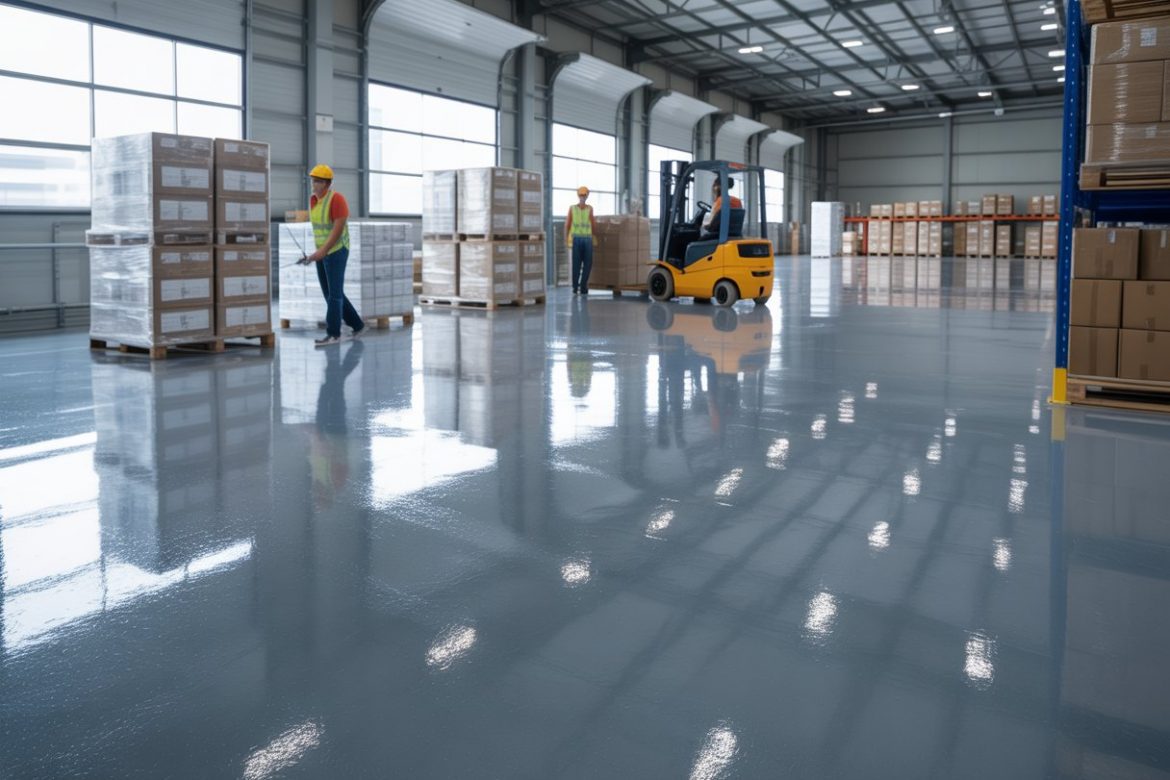
Why Epoxy Flooring Is Ideal for Warehouses and Logistics Centres: Durability and Safety Benefits
Warehouses and logistics centres face constant pressure from heavy machinery, forklift traffic, and round-the-clock operations. Standard concrete floors struggle to keep up with these demands, often cracking, staining, or breaking down over time. Epoxy flooring creates a sealed, resilient surface that handles the daily wear and tear of industrial environments whilst requiring minimal upkeep.
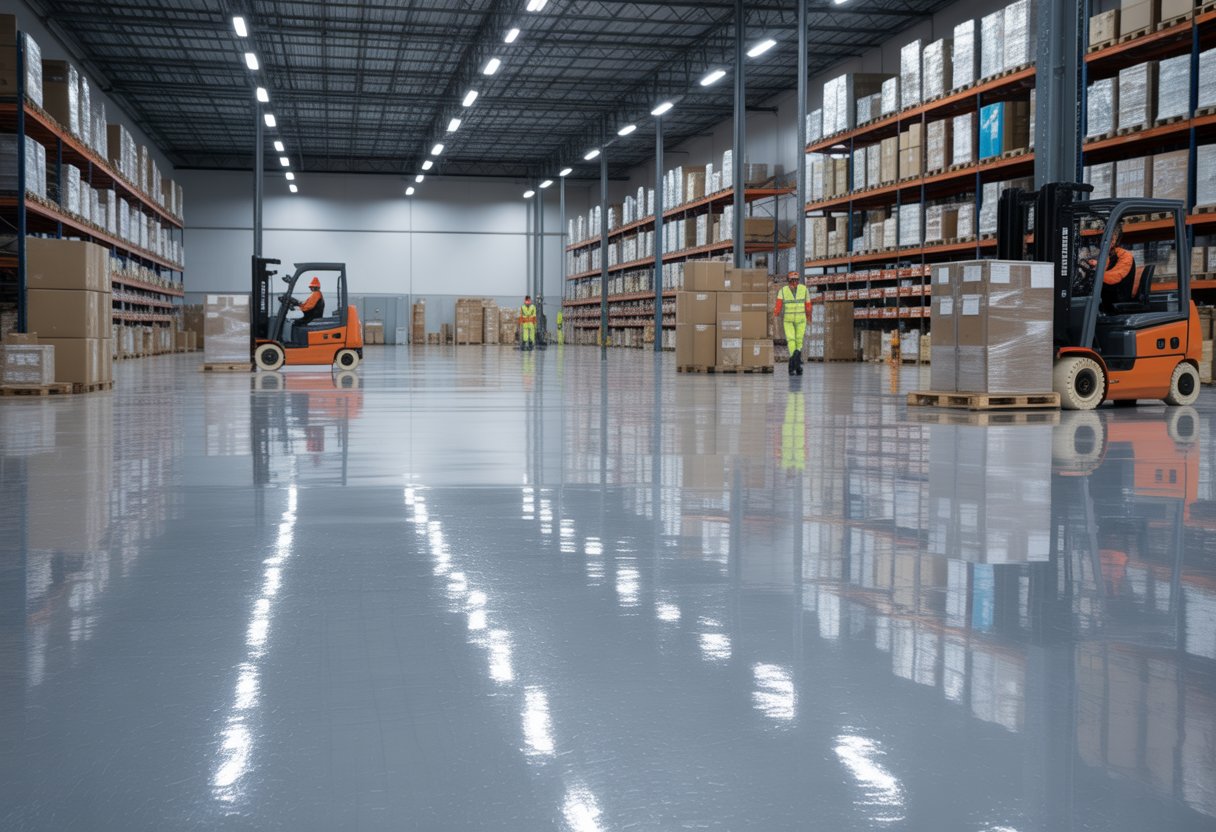
The right flooring system does more than just look good. It improves safety, resists chemicals and moisture, and supports efficient operations across the entire facility. Epoxy systems deliver these benefits whilst lasting for years under harsh conditions.
This article explores why epoxy flooring has become the preferred choice for modern warehouses and distribution centres. It covers the practical advantages, from durability and cost savings to worker safety and hygiene requirements. Readers will also learn what to consider when selecting and installing an epoxy flooring solution that meets their specific operational needs.
Core Benefits of Epoxy Flooring in Warehouses and Logistics Centres
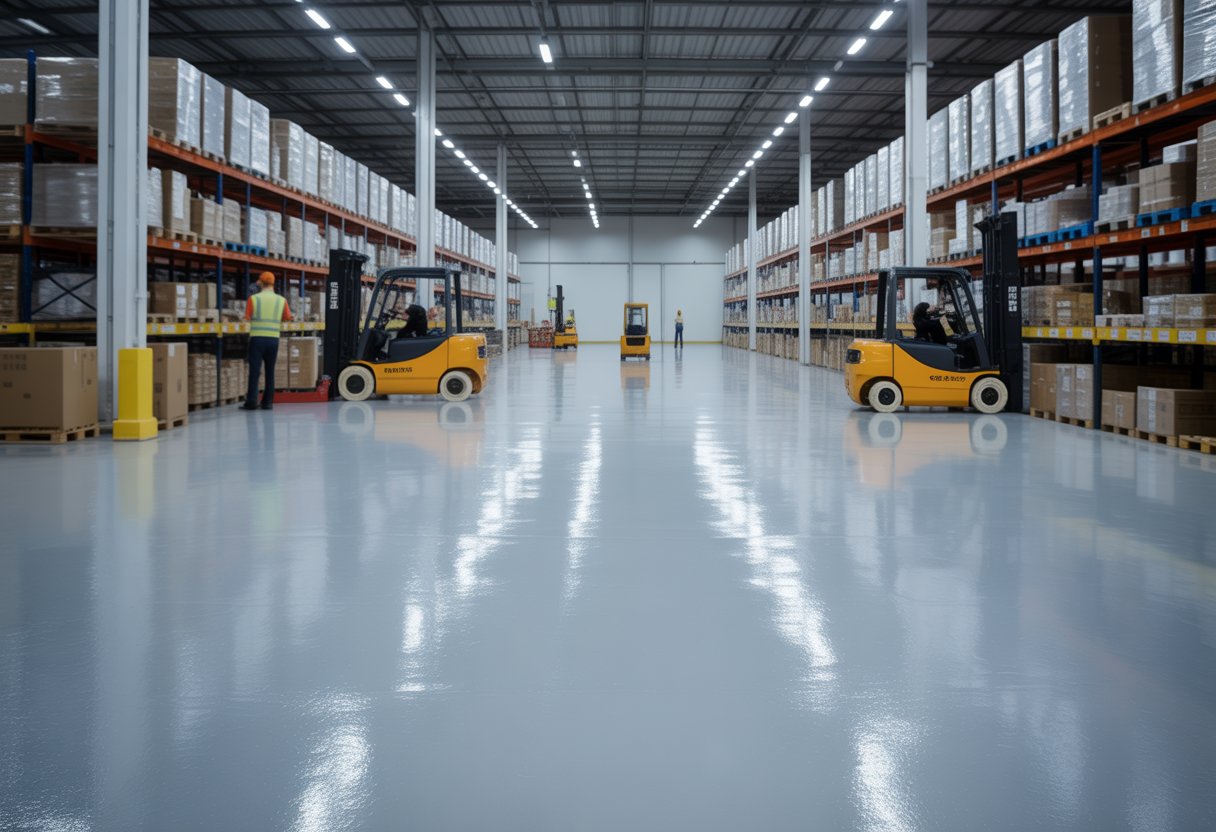 Epoxy flooring delivers measurable advantages in demanding warehouse environments. The material handles extreme physical stress whilst maintaining structural integrity and protecting the concrete substrate beneath.
Exceptional Durability and Load-Bearing Capacity
Epoxy floors provide remarkable strength that standard concrete cannot match on its own. The resin system bonds directly to the concrete base, creating a reinforced surface that distributes weight evenly across the floor. This allows the flooring to support heavy loads without cracking or breaking down.
Warehouses commonly store pallets weighing several tonnes in concentrated areas. Epoxy flooring maintains its structural integrity under these conditions. The seamless nature of the coating prevents weak points where damage might start.
The material resists wear from constant use over many years. Properly installed epoxy systems last 10 to 20 years in high-traffic environments without needing replacement. This longevity reduces disruption to operations and lowers total ownership costs.
Resistance to Heavy Machinery and Forklift Traffic
Forklifts and other industrial vehicles create intense pressure points on warehouse flooring. The metal wheels and repetitive movement paths would quickly damage unprotected concrete. Epoxy coating absorbs this stress and prevents surface degradation.
The smooth surface allows forklifts to move more efficiently. This reduces fuel consumption and extends vehicle life. Operators can work faster when the floor provides consistent traction without rough patches or cracks.
Epoxy floors handle the turning forces that forklifts create during tight manoeuvres. Traditional concrete often develops ruts and gouges in these high-use areas. The resin system distributes these forces to prevent localised damage.
Superior Abrasion and Impact Resistance
Warehouse operations involve continuous foot traffic and equipment movement that gradually wears down floor surfaces. Epoxy flooring resists this abrasion better than bare concrete. The hard resin surface maintains its finish even after years of constant use.
Impact resistance protects against dropped tools, pallets, and inventory. Whilst extremely heavy or sharp objects can still cause damage, epoxy floors withstand typical warehouse impacts without chipping or cracking. This durability keeps the floor looking professional and functioning properly.
The coating prevents concrete dust from forming as the floor ages. Standard concrete produces fine particles as it wears down, which creates cleaning issues and air quality concerns. Epoxy seals the concrete to eliminate this problem entirely.
Safety and Worker Wellbeing Enhancements
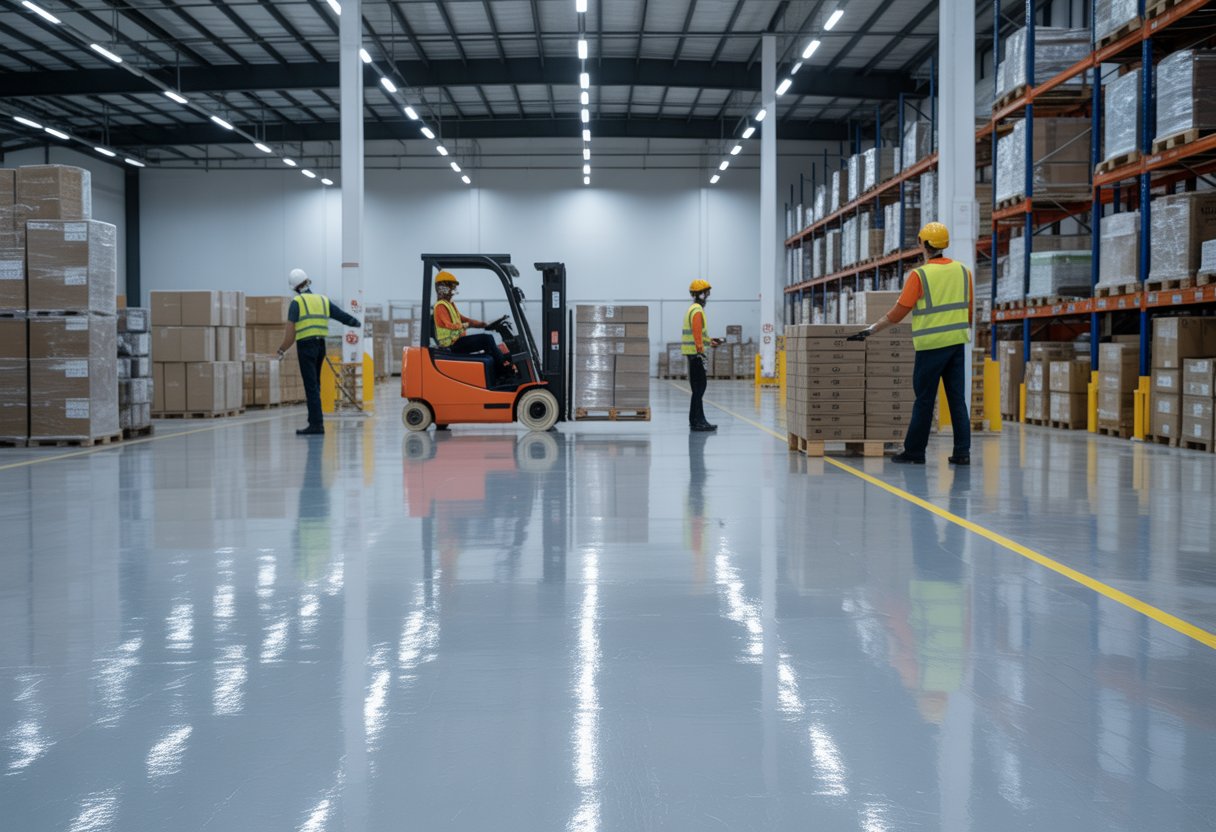
Epoxy flooring creates safer working conditions through slip-resistant surfaces, clear traffic management, and protective design features that reduce workplace accidents. The seamless surface prevents trip hazards whilst supporting hygiene standards in busy logistics operations.
Slip Resistance and Non-Porous Surface
Epoxy flooring provides slip-resistant properties that help prevent accidents in warehouses where spills and wet conditions occur. The coating can include anti-slip additives that increase traction, particularly in areas prone to moisture or oil exposure.
The non-porous surface stops liquids from soaking into the floor. This quality prevents the growth of bacteria and mould that can develop in traditional concrete floors. When spills happen, the liquid stays on the surface rather than seeping into cracks or porous material.
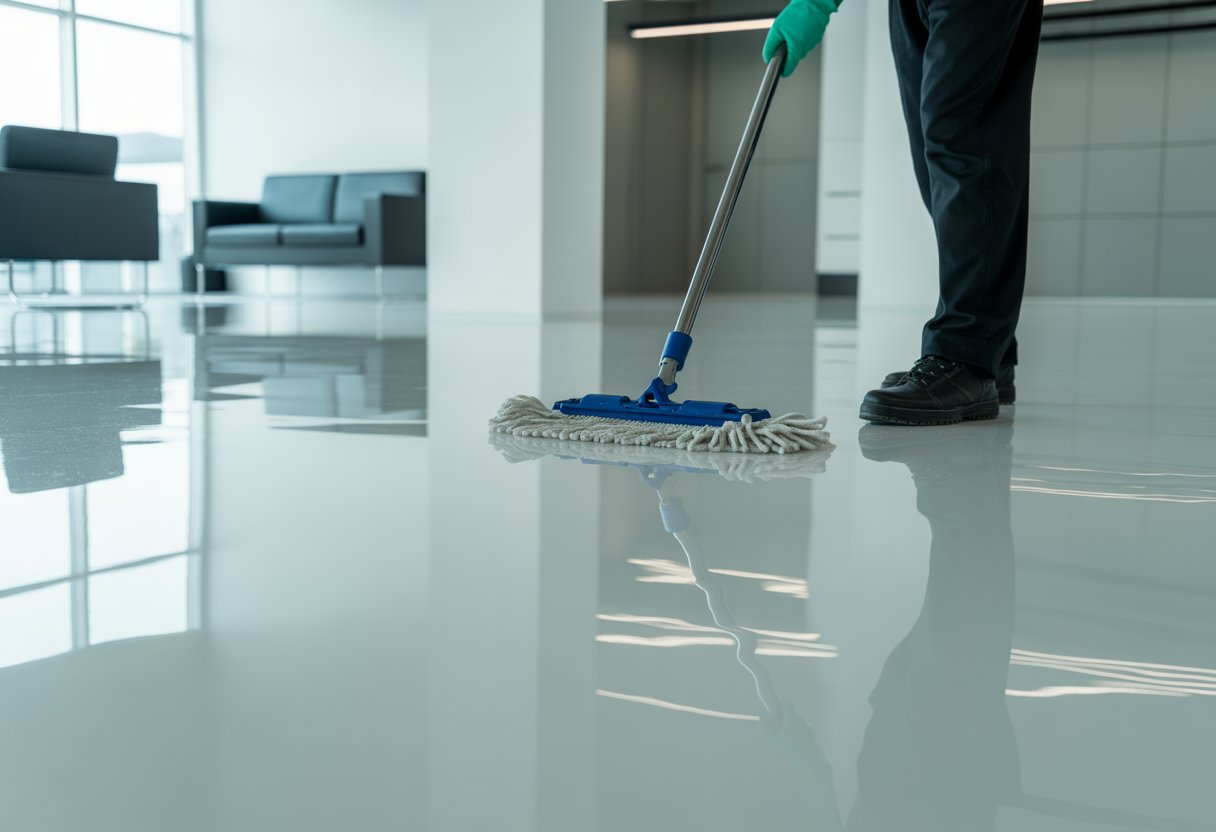
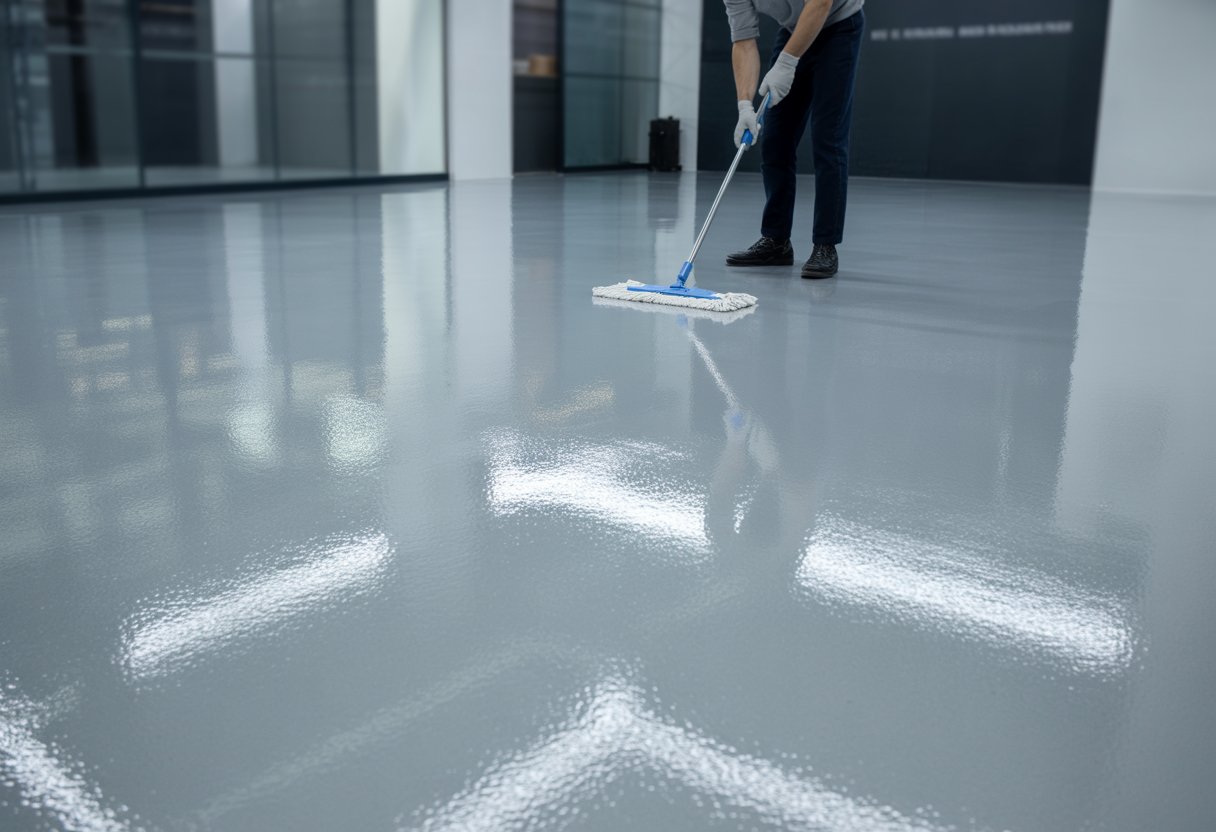
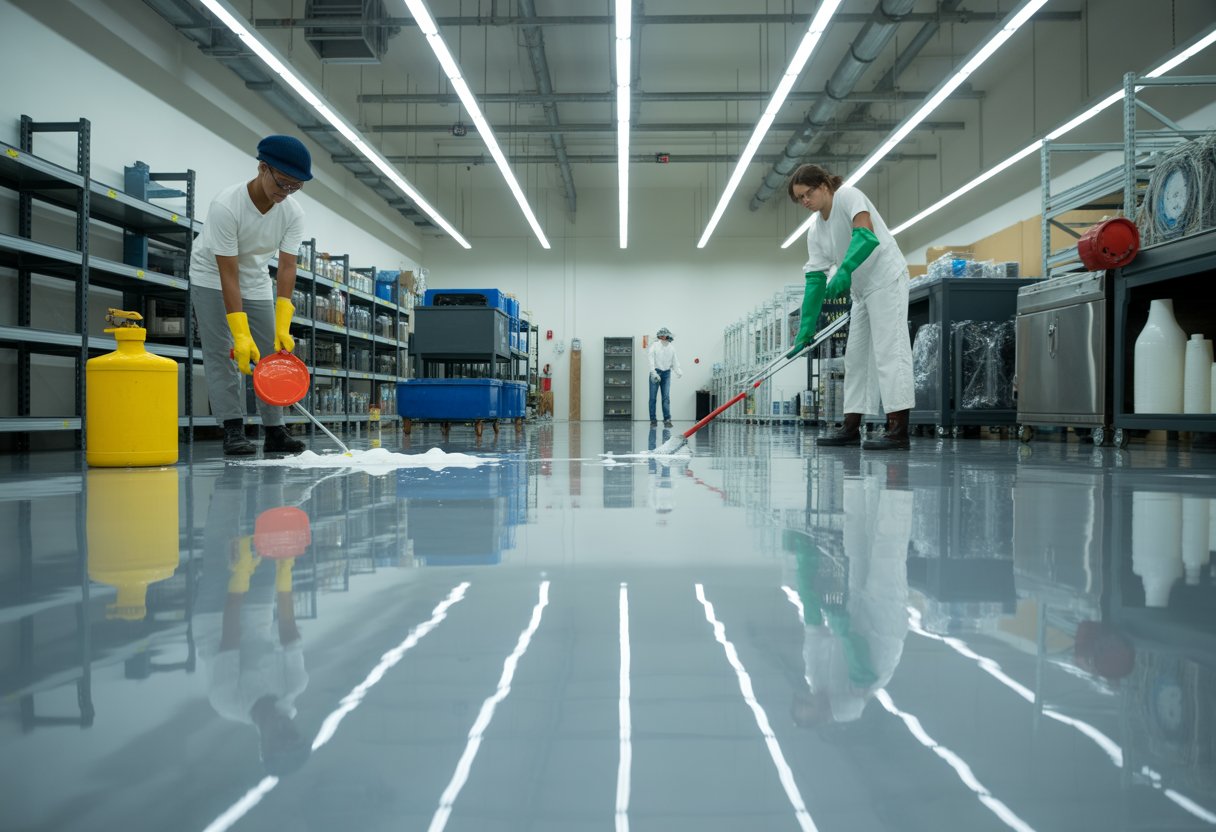
Easy cleaning becomes possible because the seamless surface has no joints or gaps where dirt accumulates. Staff can quickly wipe or mop up spills before they create hazards. The smooth finish also means routine cleaning takes less time and fewer resources compared to untreated concrete.
Demarcation for Pedestrian and Vehicle Traffic
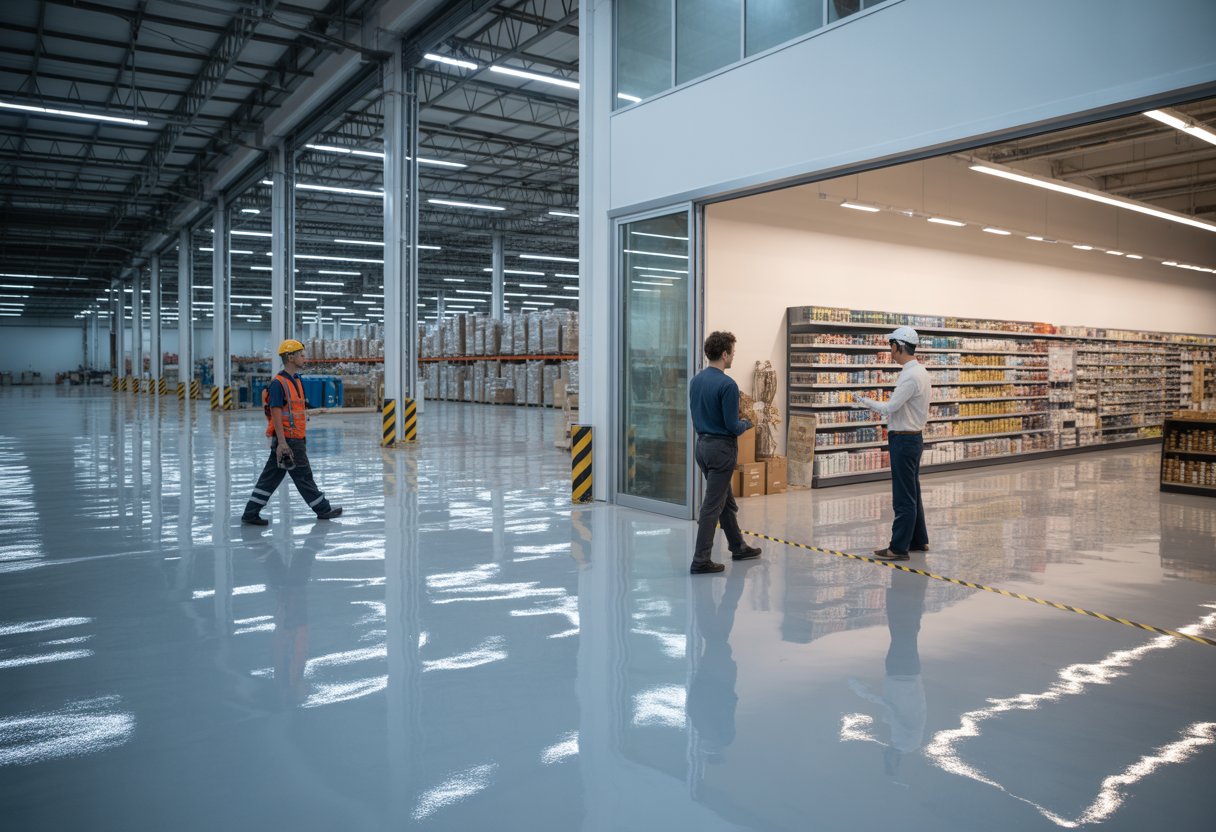
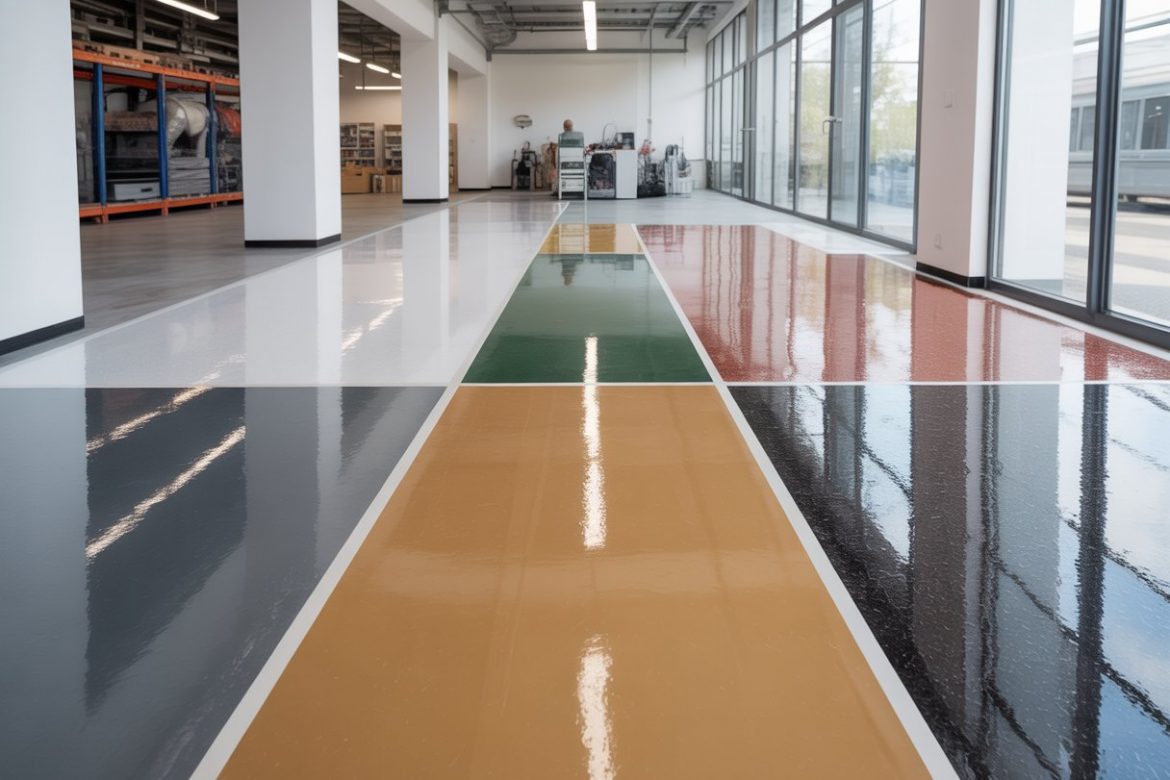
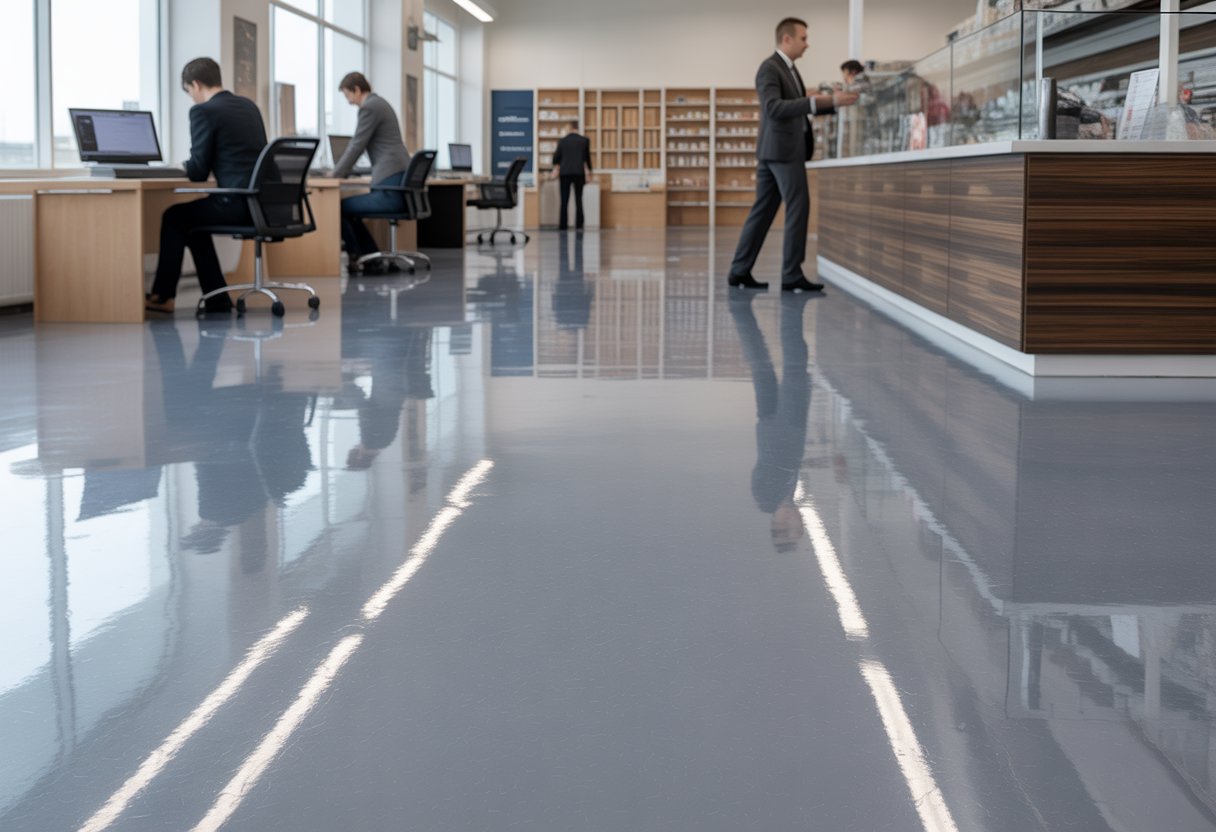
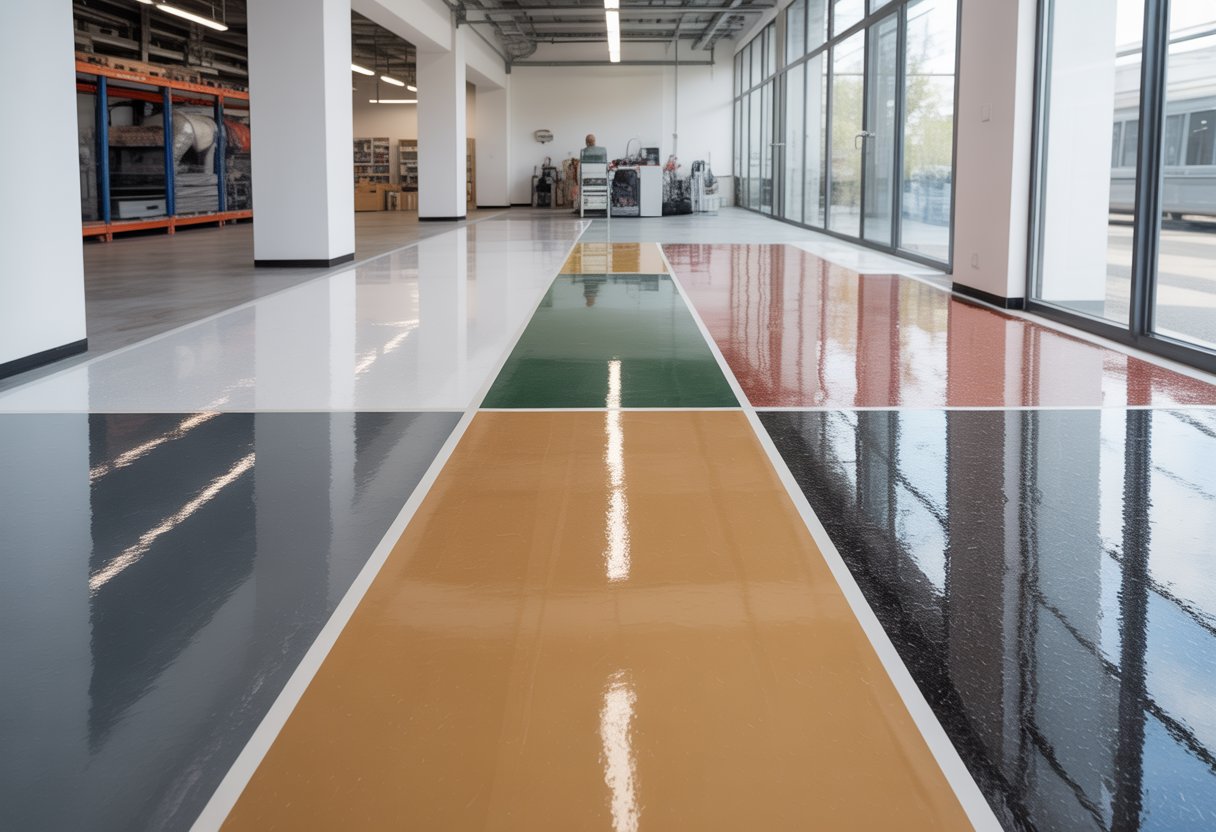
Epoxy systems allow for clear traffic demarcation using different colours and line markings. Warehouses can designate separate zones for forklifts, pedestrians, loading areas, and storage sections. These visual markers help workers navigate safely and reduce collision risks.
Coloured epoxy creates permanent boundaries that won’t fade or wear away like painted lines on concrete. The markings remain visible even under heavy traffic conditions. Facilities can use colour coding to identify hazard zones, emergency exits, and equipment storage areas.
Supporting Worker Safety Through Floor Design
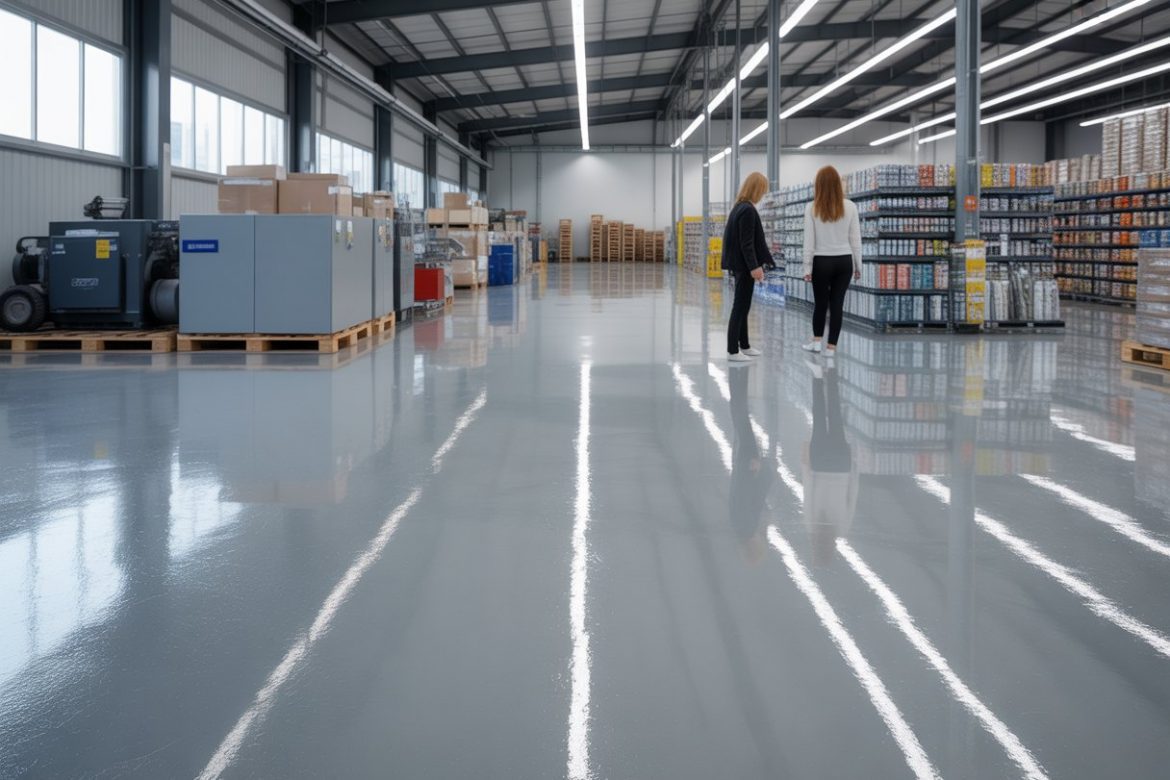
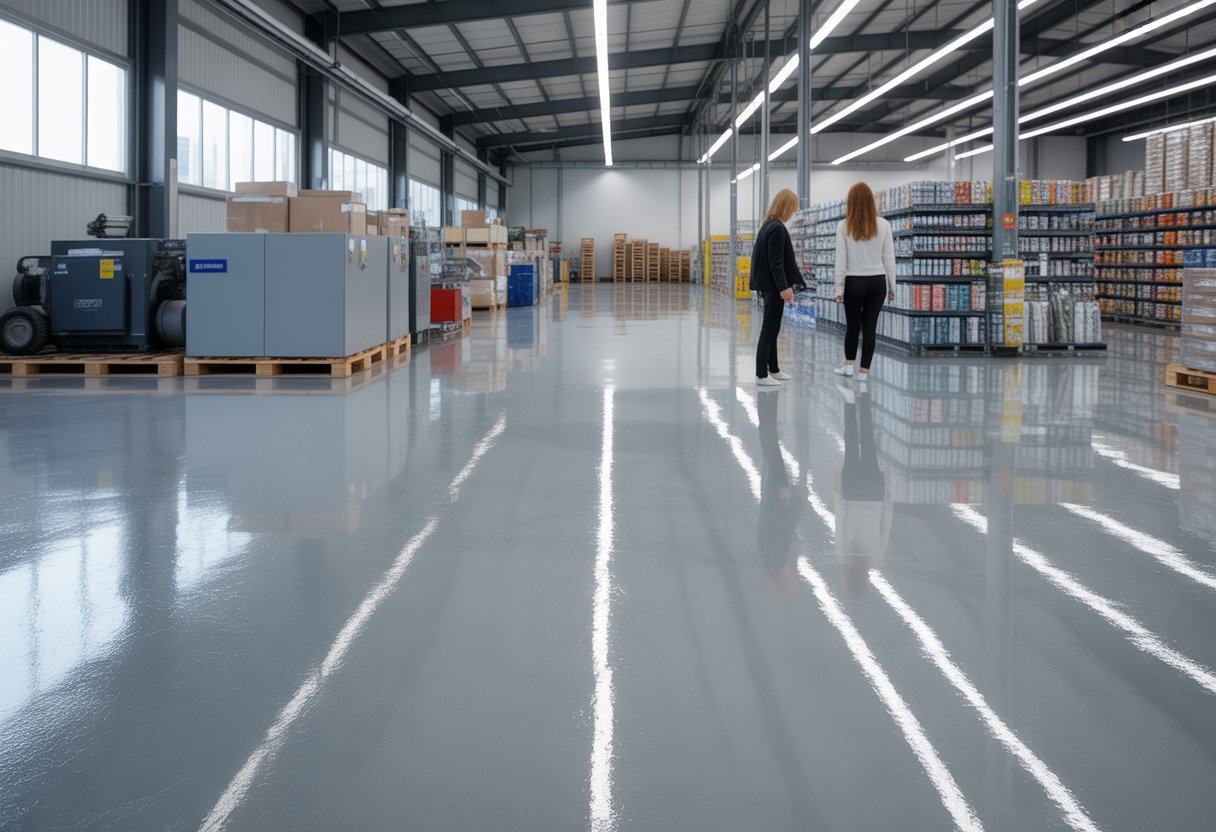
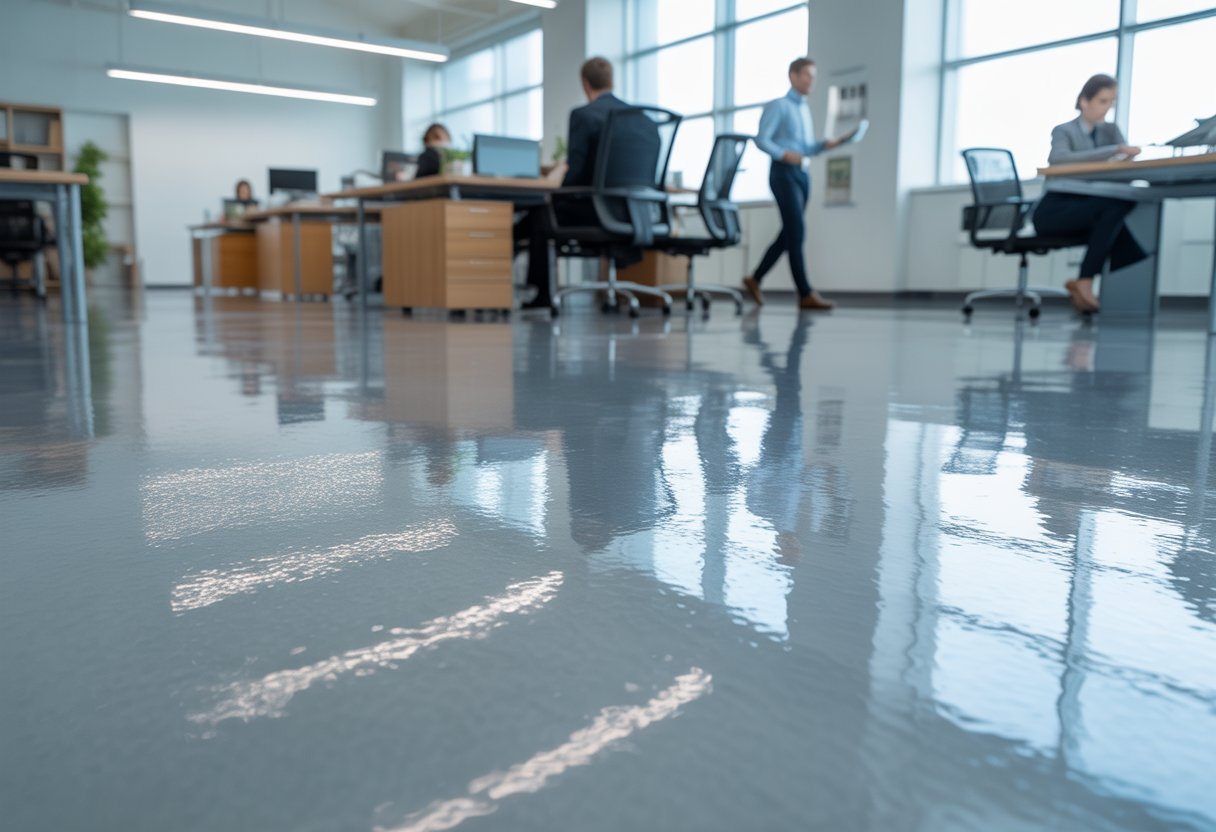
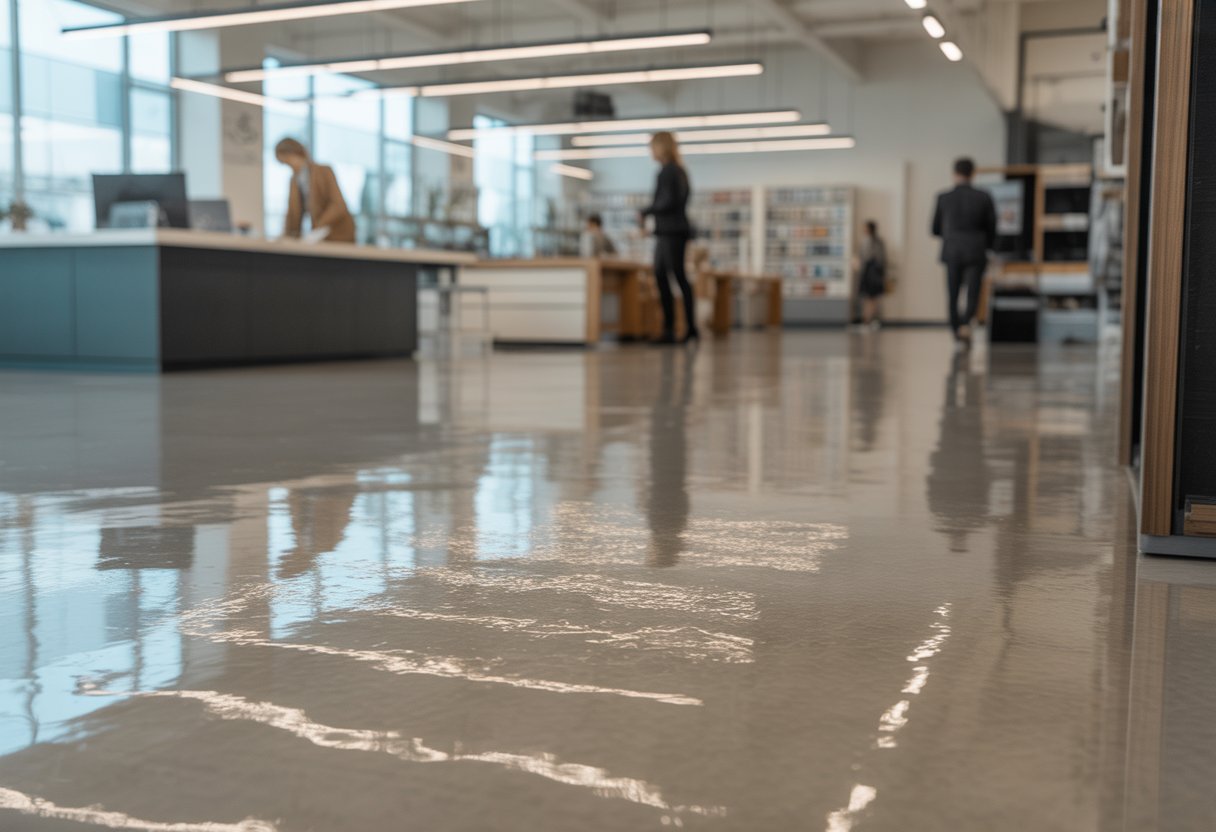
The reflective surface of epoxy flooring improves lighting conditions throughout the warehouse. Better visibility helps workers spot potential hazards and reduces eye strain during shifts. The enhanced light reflection can reduce electricity costs whilst maintaining safe working conditions.
Epoxy floors eliminate the dust that concrete surfaces generate. This dust-free environment protects respiratory health and keeps machinery running cleaner. The durable coating withstands impact from dropped items and heavy equipment, maintaining a level surface that prevents trips and falls.
Chemical, Stain, and Moisture Resistance
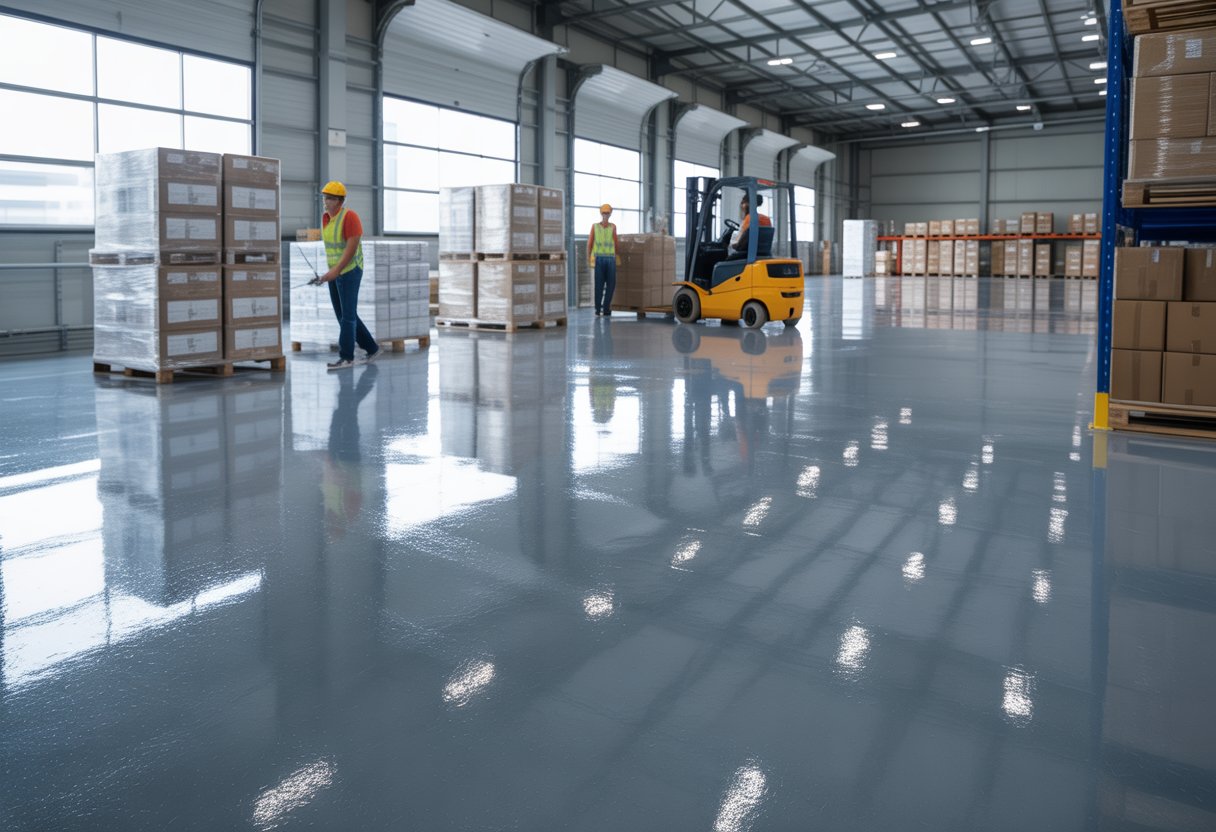
Epoxy flooring creates a non-porous barrier that stops liquids from penetrating the concrete beneath. This protective layer shields warehouse floors from the daily exposure to chemicals, oils, and water that can damage traditional flooring systems.
Protection Against Chemical Spills
Chemical resistance stands as one of epoxy resin’s most valuable properties in warehouse environments. The molecular structure of cured epoxy creates a surface that resists damage from acids, solvents, and industrial cleaning agents.
Warehouses that handle automotive fluids, cleaning products, or manufacturing chemicals benefit from this resistance. When spills occur, the epoxy surface prevents chemicals from seeping into the concrete substrate. This barrier stops deterioration that would otherwise weaken the floor structure over time.
The smooth, non-porous finish also makes spill cleanup straightforward. Staff can simply wipe away chemical residue without special treatments or extensive scrubbing. This ease of maintenance reduces downtime and labour costs whilst maintaining a safe working environment.
Different epoxy formulations offer varying levels of chemical resistance. Facilities with heavy chemical exposure should specify high-performance epoxy systems designed for industrial use.
Defence from Water and Oil Penetration
Moisture resistance makes epoxy flooring suitable for logistics centres with varying humidity levels. The sealed surface stops water from penetrating through to the concrete base, preventing structural damage and mould growth.
Oil spills pose particular challenges in warehouses with vehicle traffic or machinery. Epoxy’s resistance to oils and petroleum products means these substances sit on the surface rather than soaking in. This prevents the staining and degradation that oil causes to untreated concrete floors.
The waterproof nature of epoxy also proves valuable in areas requiring regular washing. Warehouse managers can pressure wash or mop epoxy floors without worrying about water damage or trapped moisture beneath the surface.
Maintenance, Hygiene, and Ease of Cleaning
Epoxy flooring reduces cleaning time and supports strict hygiene standards through its seamless design and resistant surface. These qualities make daily maintenance simpler whilst keeping warehouses and logistics centres presentable and safe.
Seamless Surfaces for Hygiene
Epoxy creates a seamless surface without joints or grout lines where dirt and bacteria can hide. This smooth finish prevents contamination from building up in cracks or gaps.
The non-porous nature of epoxy stops liquids from soaking into the floor. Spills sit on top of the surface rather than seeping underneath. This makes it easy to wipe away chemicals, oils, or other substances before they cause stains or create health hazards.
Warehouses that handle food products or medical supplies benefit most from this seamless design. The floor meets strict hygiene requirements because there are no hidden areas for germs to grow. Regular mopping or pressure washing removes all visible dirt and keeps the space clean.
Low Maintenance Requirements
Daily cleaning takes less time on epoxy floors compared to other industrial flooring options. A simple sweep or dust mop removes loose debris. For deeper cleaning, a wet mop with mild detergent is usually enough.
The surface resists most common warehouse chemicals without needing special cleaning products. This saves money on maintenance supplies. Heavy machinery and foot traffic don’t wear down the coating quickly, so facilities avoid frequent repairs or refinishing.
Key maintenance advantages include:
- No waxing or polishing needed
- Quick drying times after wet cleaning
- Resistance to tyre marks and scuffs
- Minimal equipment required for upkeep
Staff can clean during shift changes without long waiting periods. The floor stays functional throughout the day.
Long-Term Cleanliness and Presentation
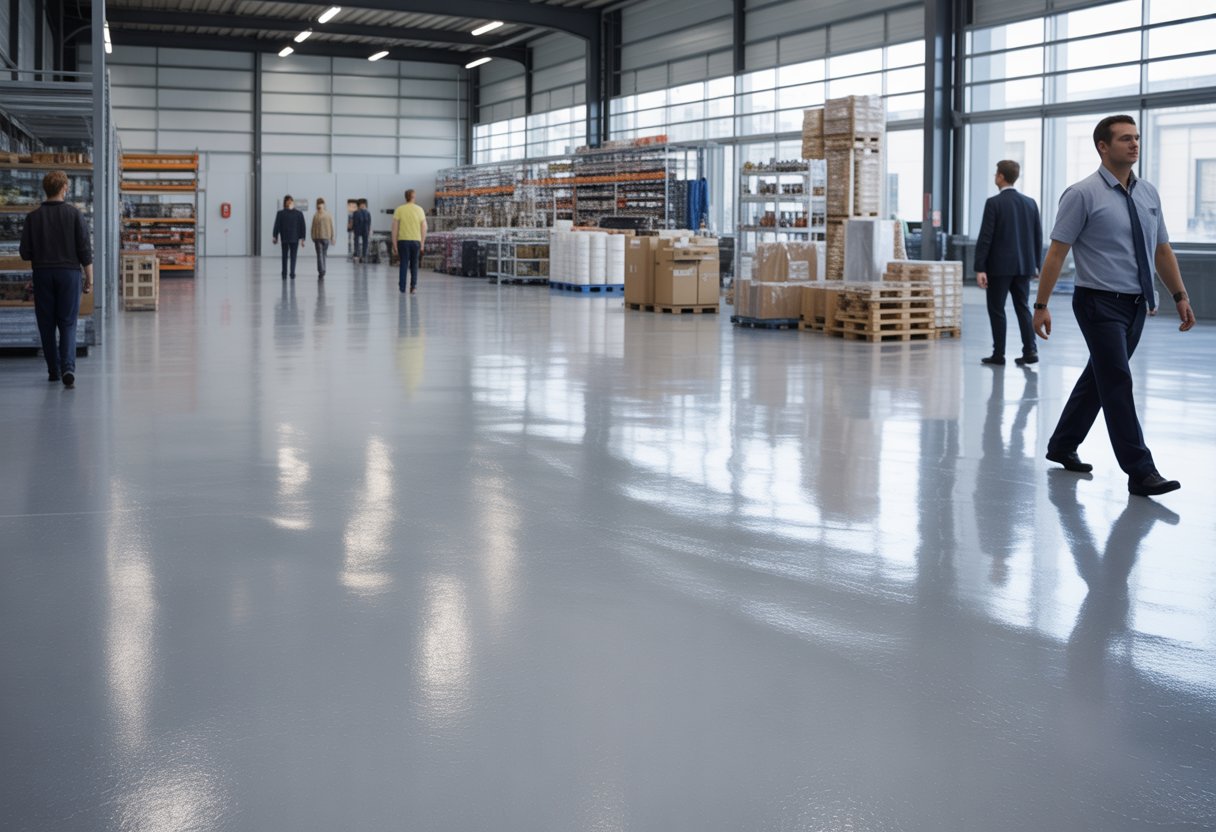
Epoxy floors maintain their appearance for years without fading or dulling. The smooth surface reflects light, which brightens the warehouse and makes the space look cleaner. This professional appearance impresses clients and inspectors.
Dust doesn’t cling to epoxy like it does to bare concrete. This keeps air quality better and reduces how often floors need attention. The coating also prevents concrete dust from breaking free, which can settle on products and equipment.
Stains from oils, chemicals, and other substances wipe away easily even after sitting for hours. The floor doesn’t absorb these materials, so they don’t leave permanent marks. This helps logistics centres maintain their standards without constant intervention or expensive restoration work.
Cost-Effectiveness and Longevity
Epoxy floor coating delivers substantial financial benefits through extended service life and reduced maintenance demands. The initial investment pays dividends through decades of reliable performance in demanding warehouse environments.
Maximising Floor Lifespan
Epoxy flooring typically lasts 20 to 30 years in warehouse settings when properly installed and maintained. This longevity stems from the chemical bond between the epoxy resin and concrete substrate, creating a unified surface that resists wear from heavy machinery and constant foot traffic.
The seamless nature of epoxy floor coating prevents moisture infiltration and chemical penetration that would otherwise degrade standard concrete. Warehouses and logistics centres benefit from this protection, as the floor withstands daily operations without developing cracks or surface deterioration.
Unlike alternative warehouse flooring options that require replacement every 5 to 10 years, epoxy maintains its structural integrity over extended periods. The floor’s resistance to impact, abrasion, and chemical exposure means facilities avoid frequent resurfacing projects that disrupt operations.
Lowering Repair and Replacement Costs
Epoxy’s durability translates to minimal repair expenses throughout its lifetime. Standard concrete floors develop pitting, spalling, and cracks that require costly interventions, whilst epoxy surfaces maintain their integrity with basic cleaning routines.
The low maintenance requirements reduce operational expenses significantly. Facilities save on repair materials, labour costs, and downtime associated with floor restoration projects. A simple sweep and occasional mop keep epoxy floors in optimal condition.
Replacement costs remain minimal due to the extended lifespan. When comparing total ownership costs, epoxy proves more economical than alternatives like vinyl, tile, or untreated concrete. The cost-effectiveness becomes particularly evident in high-traffic logistics centres where floor degradation typically accelerates. Facilities allocate resources to core operations rather than continuous floor repairs.
Choosing and Installing the Right Epoxy Flooring Solution
Selecting the proper epoxy system and ensuring professional installation are critical steps that determine the floor’s long-term performance. The right choices protect your investment and maximize operational efficiency.
Selecting the Ideal Flooring Option
Warehouses and logistics centres require specific epoxy formulations based on their operational demands. Heavy-duty epoxy systems designed for high-traffic environments typically range from 3mm to 6mm in thickness. These provide adequate protection against forklift traffic and constant foot traffic.
Chemical resistance levels vary significantly between flooring options. Facilities handling acids, oils, or solvents need specialised chemical-resistant formulations. Standard epoxy may suffice for dry storage areas with minimal exposure to corrosive substances.
Key selection factors include:
- Traffic intensity – Light, medium, or heavy vehicle use
- Chemical exposure – Types and concentrations of substances present
- Temperature fluctuations – Hot or cold storage requirements
- Installation timeline – Fast-cure versus standard-cure systems
The floor’s existing condition also influences product selection. Damaged concrete may require repair mortars or self-levelling underlayers before epoxy application. New concrete must cure for at least 28 days before installation begins.
The Role of Professional Installation
A qualified resin flooring contractor ensures proper surface preparation and application techniques. These professionals assess moisture levels in the concrete substrate using specialised equipment. High moisture content causes epoxy delamination and premature failure.
Professional installation involves multiple preparation stages. Contractors mechanically grind or shot-blast the concrete to create the proper surface profile. They repair cracks and joints using compatible materials before applying primer coats.
Temperature and humidity control during installation affects curing times and final adhesion. Experienced contractors monitor environmental conditions and adjust application methods accordingly. They apply the epoxy in uniform layers using rollers or squeegees to achieve the specified thickness.
Professional teams also manage safety requirements during installation. They coordinate work schedules to minimise disruption to warehouse operations. Most commercial installations require 3-7 days from start to finish, depending on the system complexity and floor area.
Frequently Asked Questions
Epoxy flooring offers significant advantages for warehouses and logistics centres, including durability against heavy loads, chemical resistance, low maintenance needs, and enhanced safety features. Understanding these practical benefits helps facility managers make informed decisions about their flooring investments.
What are the principal benefits of using epoxy flooring in industrial settings?
Epoxy flooring provides a dust-free, seamless surface that stands up to the demanding conditions of industrial environments. The coating creates a protective barrier over concrete that resists wear from constant use.
The material reflects light effectively, which improves visibility throughout the facility. This enhanced brightness can reduce energy costs whilst creating a more pleasant working environment. Epoxy floors also resist moisture penetration, preventing damage to the underlying concrete structure.
How does epoxy flooring enhance safety in warehouses and logistics centres?
Epoxy coatings create a smooth, slip-resistant surface when properly formulated. Many systems include anti-slip aggregates that provide traction even in areas prone to spills or moisture.
The reflective properties of epoxy flooring improve lighting conditions across the facility. Better visibility helps workers spot potential hazards more quickly. Additionally, epoxy floors can incorporate colour-coded zones and line markings that clearly define traffic patterns, loading areas, and pedestrian walkways.
Can epoxy floors withstand heavy machinery and traffic typically found in logistics operations?
Epoxy flooring systems are specifically engineered to handle the weight and movement of forklifts, pallet jacks, and other industrial equipment. The coating forms a strong bond with the concrete substrate, creating a unified surface that distributes loads effectively.
These floors resist impact damage from dropped items and tolerate the constant rolling loads of wheeled vehicles. Properly installed epoxy systems maintain their integrity even under the relentless demands of busy distribution centres. The material’s resilience makes it suitable for facilities that operate around the clock.
What are the maintenance requirements for epoxy flooring in high-traffic areas?
Epoxy floors require minimal maintenance compared to traditional concrete surfaces. Regular sweeping and occasional mopping with mild detergents keep the surface clean and functional.
The seamless nature of epoxy flooring eliminates joints and gaps where dirt accumulates. Spills wipe up easily from the non-porous surface. Unlike bare concrete, epoxy floors don’t produce dust, which reduces cleaning time and improves air quality in the facility.
How does the installation of epoxy flooring compare in cost and time to other industrial flooring options?
Epoxy flooring typically installs faster than many alternative industrial flooring systems. The application process involves surface preparation followed by resin application, with most projects completing within several days depending on facility size.
Initial costs for epoxy flooring fall within a moderate range compared to other industrial options. The long-term value comes from reduced maintenance expenses and extended lifespan. Facilities can often remain partially operational during installation when work is scheduled in phases.
Is epoxy flooring resistant to chemical spills and stains common in warehousing and logistics?
Epoxy resin flooring offers excellent resistance to many chemicals found in warehouse environments. The coating protects against oils, solvents, and cleaning agents that would damage bare concrete.
Chemical tolerance varies depending on the specific epoxy formulation selected. Most standard epoxy systems handle routine spills effectively when cleaned promptly. For facilities dealing with particularly aggressive chemicals, specialised epoxy formulations provide enhanced protection against specific substances.
Need Epoxy Resin Flooring for Your Commercial Property?
Call: 0161 900 2744
Email: pashleyfloors@aol.com
Use Our Contact Form